


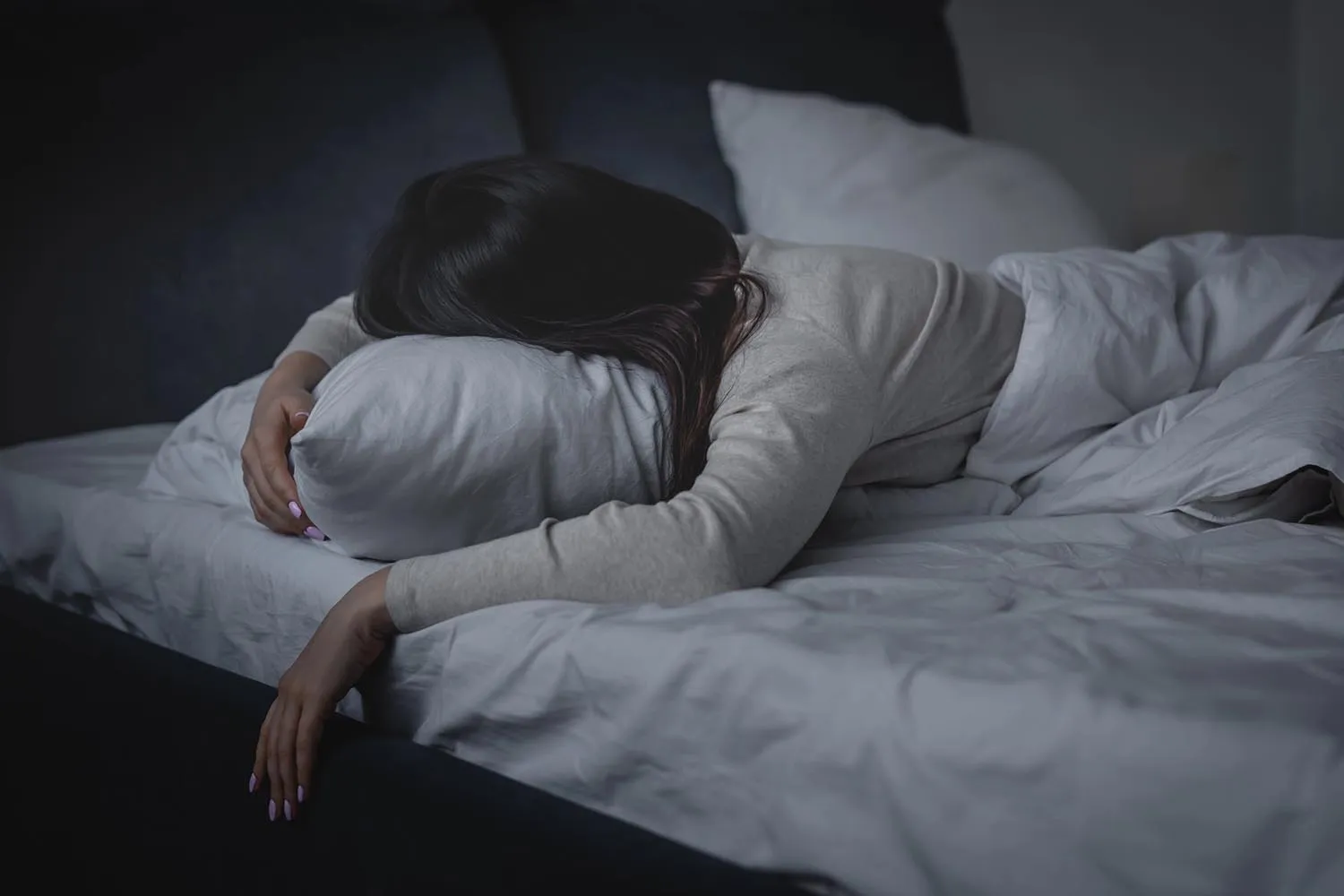
For many of the patients I see, sleep has become one of the most frustrating parts of managing their condition. Not because they are doing anything ‘wrong’, but because standard advice rarely accounts for what their bodies are actually contending with. When poor sleep sits alongside chronic pain or another long-term condition, it stops being a question of habits and ‘sleep hygiene’ alone. It becomes a clinical problem in its own right, and one that feeds back into the very condition that is keeping the person awake.
According to findings from a Curaleaf Clinic survey, more than half of people living with a diagnosed health condition described themselves as sleep deprived (54%), compared with just under half of the general adult population (44%). The gap matters, because for this group a run of bad nights is not simply about feeling more tired than everyone else. Experimental and clinical work shows that sleep loss lowers pain thresholds, impairs the brain’s own pain-dampening pathways and amplifies next-day pain sensitivity. So broken sleep doesn’t just leave someone unrested; it can measurably make their underlying condition harder to control.
Why sleep is harder when you have an underlying health condition
The relationship between chronic illness and poor sleep runs in both directions, and that is part of what makes it so difficult to break. Pain disturbs sleep directly, through discomfort, repeated waking and a nervous system that struggles to switch off. Disrupted sleep, in turn, heightens pain sensitivity, so the following night tends to be harder than the one before. Over time, mood, concentration, resilience and symptom control all begin to erode.
Importantly, this is not simply a matter of one symptom being unpleasant alongside another. Sleep and pain share a great deal of underlying biology. The same systems implicated in how we experience and modulate pain – among them the opioid, immune, melatonin, orexin and endocannabinoid systems, and the body’s stress-hormone (HPA) axis – are also central to how we fall and stay asleep. That shared machinery helps explain why the two problems are so tightly entangled, and why treating one in isolation so often disappoints.
Everyday factors can tip a fragile balance. In summer, longer daylight and warmer nights are a minor inconvenience for a healthy sleeper. But initiating sleep depends partly on a drop in core body temperature, which is harder to achieve in a warm bedroom, and on melatonin release as light fades, which prolonged evening light suppresses. For someone with a sensitised nervous system or a condition that already fragments their sleep, those small circadian nudges can be enough to trigger a sustained run of poor rest.
Where standard approaches help, and where they stop
The foundations and principles of good sleep hygiene work for many people. Cognitive behavioural therapy for insomnia (CBT-I), and the grounding principles behind sleep hygiene – consistent wake times, stimulus control, a cool and dark room, sensible limits on evening screens – are genuinely effective and are rightly the first-line treatment for insomnia, including for people who also live with chronic pain. When someone can engage with them, they can make a real and lasting difference, and they should usually be tried first.
But two things temper that optimism in practice. First, engagement is hard: trials of CBT-I in people with chronic pain repeatedly run into low adherence. Asking someone in persistent pain to restrict their time in bed and reshape their nights is demanding. Second, and more fundamentally, when it is the pain itself that keeps fracturing sleep, a sleep-focused therapy can only do so much. It treats sleeplessness, not the thing causing it.
That is also where our medication options feel thin. Older hypnotics – benzodiazepines and the ‘Z-drugs’ – carry real risks of tolerance, dependence and next-day impairment, which is precisely why guidelines steer away from long-term use. The most exciting recent advance is a newer class, the dual orexin receptor antagonists (DORAs), which work by dialling down the brain’s orexin ‘wake’ signal rather than sedating it into submission. In network meta-analyses, they outperform the older agents on both effectiveness and tolerability, and, notably, they do not appear to produce the tolerance, rebound insomnia or distorted sleep architecture that limit the older drugs. They are a meaningful step forward.

Even so, DORAs act on the sleep–wake switch, not on the chronic illness that is often driving the wakefulness, and they have not been established as a treatment in chronic-pain populations specifically. For the patient whose sleep is being undermined by their underlying condition, we still lack a medicine in the standard armoury that addresses the cause rather than the symptom.
Where medical cannabis fits into this picture
This is the bit worth talking about openly. For the right patient, and only after a multidisciplinary clinical assessment, medical cannabis may target sleep directly, in addition to the underlying condition – chronic pain, and often co-existing anxiety.
The evidence here is mixed, but for chronic pain it is reasonably encouraging. A large 2023 BMJ umbrella review graded the evidence that cannabis-based medicines reduce chronic pain by around a third as high certainty, while being equally clear about dose-limiting side effects such as drowsiness, dizziness and psychological effects. On sleep specifically, a McMaster meta-analysis of randomised trials found that, among people with chronic pain, medical cannabis probably produces a small – but real – improvement in sleep quality and sleep disturbance. When cannabinoids have been tested for insomnia as a standalone diagnosis, by contrast, the trials are small and at high risk of bias, and they do not yet support confident recommendations. A 2026 systematic review in The Lancet Psychiatry did find that cannabinoids increased total sleep time in people with insomnia, but was candid that the overall evidence base remains low in certainty.
This is exactly the question my colleagues and I set out to examine using real-world data from the UK Medical Cannabis Registry, in a study published in Pain Practice. We followed 1,139 people being treated for chronic pain and divided them by how well they were sleeping at the outset: 517 with impaired sleep and 622 whose sleep was relatively intact. As expected, those sleeping badly started in a worse position across the board – more pain, more anxiety, poorer quality of life. Yet over twelve months, it was the worst sleepers who tended to show the greatest gains in pain severity and in sleep quality. Tellingly, the patients whose sleep improved were also the ones most likely to report a meaningful improvement in their pain, which is precisely what the shared biology of sleep and pain would predict.
This finding must be interpreted with caution. This was observational data without a control group, so it cannot on its own prove that cannabis caused these changes, and when we adjusted for how severe people’s pain was to begin with, baseline pain severity – not sleep status – emerged as the stronger predictor of who responded.
What this means in practice
If you are managing a chronic condition and sleep has become a persistent problem, the single most useful shift is to treat it as a clinical issue rather than a side effect to be endured. Poor sleep is likely to have a measurable impact on your pain, your mental health and your quality of life, and it deserves the same attention as any other symptom.
Start with the foundations, as these help more people than any medicine. But if pain keeps dismantling your sleep despite them, that is a reason to ask for more, not to assume nothing more exists. An honest conversation about how your sleep is being affected can open the door to a specialist referral and a wider set of options. For carefully selected patients whose condition has not responded to conventional treatment, medical cannabis may be one of those options. The goal, as always, is not to champion any single answer but to make sure each patient has access to the full range of what is genuinely available to them.
Find out more about how medical cannabis can support better sleep here.
This is a paid-for article published in conjunction with the brand as part of an advertising campaign. Paid-for content helps support our mission of delivering quality journalism.
