


There’s no question about it: a gender health gap – referring to the fact that women don’t always get fair access to healthcare or have the same outcomes as men – exists in the UK, even in 2026. The World Economic Forum’s Global Gender Gap 2024 Report ranked the UK 104th globally in terms of gender health equality.
“Right now, there are over 760,000 people on gynaecology waiting lists across the UK, enough to fill Wembley Stadium about eight times over,” Dr Shabnam Sarshar, who has a PhD in pharmaceutical biology and phytochemistry, and extra training in cannabinoid medicine and natural women’s health, told leafie. “If you’ve got endometriosis, you’re looking at an average of 9 years and 4 months just to get diagnosed, even though it affects 1 in 10 women.”
There are HRT shortages, the most recent in 2025, and most women who answered the government’s own survey said they had been ignored by a health professional.
The gender health gap impacts just about every aspect of women’s health – endometriosis, perimenopause and menopause, period-related symptoms associated with PMT, PMDD, and chronic pain conditions like fibromyalgia and vulvodynia – according to Dr Sarshar.
“These aren’t rare problems being missed,” she said. “They’re really common ones.”
How we got here
Back in 1977, a Food and Drug Administration policy barred women of childbearing age from early drug trials, a precaution taken after drug-related incidents, particularly due to the use of the drug Thalidomide. It was a sedative never approved for use in the United States but used widely in Europe and Canada. Thousands of women who took the drug while pregnant gave birth to babies with horrible limb deformities.
“That policy shaped trial design into the early 1990s, until rules changed to require women’s inclusion,” Dr Sarshar said. “For two decades, we built most of modern medicine on male bodies and just assumed it applied to women too.”
The consequences are “concrete,” according to Dr Michelle Nyangereka, HCPC Registered Chartered Counselling Psychologist.
“Even now, fewer than 30% of participants in industry-sponsored early-phase trials are women,” she told leafie. “Female hormonal cycling has long been treated as a ‘confounding variable’ rather than biology worth studying.”
It isn’t just human trials impacting the gender health gap, but the animal research underneath it. For example, Dr Sarshar said cannabinoid studies have mostly used male rats and mice, because female hormone cycles were seen as “messy data” that got in the way.
And then there is the issue of money – “In the UK, only a tiny slice of public research funding goes to reproductive health, and that hasn’t meaningfully shifted in over a decade,” Dr Sarshar said, also mentioning the lack of doctors trained in women’s health.
Could cannabinoids help?
Amid the gender health gap, could cannabinoids step in to close the gap, giving relief to women?
“The endocannabinoid system is the body’s master regulator that governs every other system within the body,” Dr Nyangereka said. “In female physiology, it’s even more embedded. The ovary produces its own endocannabinoid – anandamide (the ‘bliss’ molecule) – fluctuating across the cycle.”
Anandamide rises and falls with a woman’s cycle and life stage because it is broken down by the enzyme called FAAH, which is “turned down” by oestrogen.
“Across a normal cycle, anandamide can roughly double between your lowest point and ovulation,” Dr Sarshar said. “That’s not a small thing. That’s a pain-and-mood molecule swinging up and down every single month.”
This stark fluctuation particularly impacts pain and mood associated with period pain, endometriosis, and menopause, but there is a “real potential” that cannabinoids could help as they interact with the endocannabinoid system.
“The biology connecting hormones to this system is some of the clearest, best-understood stuff in the whole field, and that’s actually rare in women’s health,” Dr Sarshar said. “We genuinely know that oestrogen controls the enzyme that controls anandamide, and that this touches pain, bone, mood, even body temperature.”
Sara Marjoniemi suffered from hormonal migraines 20 days a month for years. She had to “jump through hoops” – trialling several treatments which had lots of side effects and didn’t work – before finally taking supplements including CBD, magnesium, and vitamins B and D.
“These natural sources helped me, and I saw my migraine days drop to two or three a month,” she told leafie.
When she later had symptoms of perimenopause, she started combining ingredients again to find an equilibrium that would minimise the impacts of her changing hormones.
Three years ago, Sara’s mum complained about not sleeping well, and Sara suggested she use CBD. “She was super conservative,” Sara said. “She said she couldn’t use that – it was a drug.” Her mum did give it a go, and woke up the next morning having had a lovely sleep without getting the high she had initially feared.
From this journey, she founded Her Eir, named after the Nordic goddess of health, a London-based wellness brand focused on supporting women’s health through science-backed, natural drink powders and period patches (the period patches include CBD).
What are the research gaps?
Although there have been small to mid-size studies, pilot trials, and self-reported data, there isn’t a single large, definitive phase-III-type trial of cannabinoids for a women’s-health–specific indication.

Evidence (all from small, mostly Italian trials) is strongest for targeted, local treatments – like a CBD gel for vulvar pain, PEA for period pain, and a PEA combo for endometriosis pain, according to Dr Sarshar.
When you look at real-world use, observational studies and surveys in women with endometriosis, chronic pelvic pain and other gynaecological conditions consistently show that a clear majority report meaningful pain relief and better quality of life with cannabinoids.
“In animal models of post-menopause, CBD has also improved bone density and metabolic health, which is one reason people are excited about its potential in midlife women, even though we don’t yet have the equivalent human trials,” Dr Sarshar said.
There is also cannabinoid-menopause evidence from surveys, which Dr Nyangereka said is valuable for showing the benefits to women, but not designed to guide dosing.
“The why this should work is rock solid,” said Dr Sarshar. “The what actually works, and for whom isn’t there yet. Both things are true at once, and that’s the honest story.”
What is available in the UK?
Through the NHS, there isn’t much available for patients, much less for women with women’s health issues who want to access medical cannabis.
“NHS cannabis prescribing is restricted to three licensed products for a narrow set of conditions – none touching dysmenorrhoea, endometriosis or menopause,” Dr Nyangereka said.
She said 99% of patients access medical cannabis privately at consultation costs of £50–£285 and monthly medication costs of £65–£500, with broader options existing but only for paying patients.
“Cost is the most immediate barrier, with NHS provision essentially absent for these conditions,” Dr Nyangereka said. “Stigma compounds it, especially around gynaecological and sexual health.”
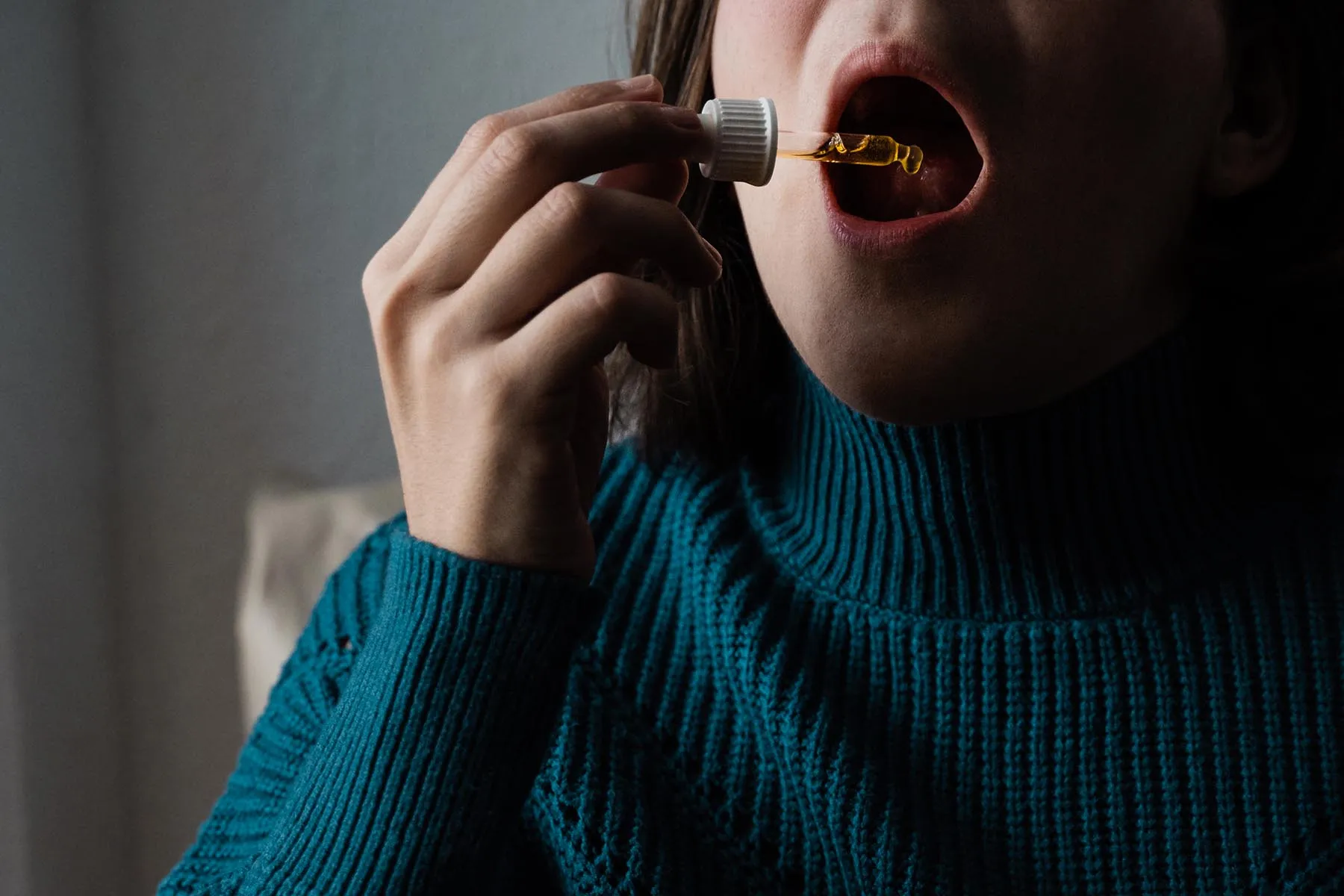
There is legal, easy-to-access, and regulated CBD available in the UK “that you can just buy,” Dr Sarshar said, “but current guidance from the Food Standards Agency puts a conservative upper limit of about 10 mg per day from food supplements, much lower than many of the doses used in clinical trials.”
And products that have cleared UK approval are mostly pure CBD isolate, even though products that have shown the best results in trials are the ones with extra stuff in them, like terpenes and PEA.
“Formulation is what the industry could fix tomorrow,” Dr Nyangereka said. “However, supply has to be driven by demand. If patients don’t know about new formulations, there is no demand. People continue to request what they know and the market remains stuck.”
Women are being sold plain, oral CBD in health-shop doses for things like endometriosis or fibromyalgia pain, but the two biggest, best-run trials both came back negative, said Dr Sarshar.
“We’ve basically built a system that approves the simplest product to test, not necessarily the one most likely to work,” she continued. “And anything outside the official approved list has zero quality guarantee on what’s actually in it.”
Women are choosing between something cheap and legal, but weak, or something potentially more useful but expensive and not yet backed by trial evidence for her specific condition.
What worries Dr Sarshar is that due to weak formulations and the high cost of medical treatment, women are often working out drug interactions completely alone. “CBD changes how your liver processes things, including the contraceptive pill, some antidepressants, and thyroid medication, and most GPs haven’t been trained to flag that,” she said. “So women either avoid combining things out of caution or combine them without knowing there’s a risk at all.”
Stigma and lack of GP education make it all worse
Women who already feel dismissed by doctors for women’s health issues (as shown in the government’s own survey) often make women say less, not more, when seeing a GP who hasn’t had training about CBD. “The people who need the most expert advice on dosing end up managing it quietly and alone,” said Dr Sarshar.
And Dr Nyangereka is concerned that GPs haven’t been educated nearly enough about the endocannabinoid system. “The clinician a woman asks first is the least equipped to answer,” she said.
What’s next?
If evidence is compelling and women are already looking into treatment options because of what the NHS isn’t offering, then where do we go from here?
“This space now needs funded trials at scale, GP training that treats the endocannabinoid system as standard, and access that doesn’t depend on what a woman can pay privately,” Dr Nyangereka said.
Dr Sarshar agreed. What’s missing, she said, is not the biology, but the work – proper trials that actually check where someone is in their cycle, products built around what the biology says should work rather than what’s easiest to get approved, and doctors trained enough to have a real conversation instead of leaving women to Google it.
“Women in the UK are already choosing this route, solving problems the NHS isn’t currently solving,” she concluded. “That’s not proof the science is settled. It’s proof that the demand is way ahead of the research. The UK has a real shot at leading here. There are now proper high-dose, well-designed CBD trials running in the UK, exactly the sort of trials this field has been missing. If we get the next five years right – checking hormones properly, designing around the actual biology, funding it properly – this could end up being one of the real wins in a field that usually moves painfully slowly.”
