


We’re not strangers to the rise of CBD at leafie. The cannabinoid was a core subject when we launched in 2019, shifting from a quietly whispered health trend to a staple on Boots shelves in five years. Now, researchers want to wrap your sandwiches in a plastic based on the cannabis compound.
This isn’t the first time hemp has been tipped to replace petrochemical-based plastics, but this time the plant might actually solve a crisis it didn’t cause. New research from a team at the University of Connecticut and Purdue claims it’s cracked one of the biggest problems in replacing plastic with something more natural. Could CBD’s future lie not in what we put in our bodies, but in changing what we put in our bin?
Cracking the plastic problem
The UK uses roughly five million tonnes of plastic each year; packaging accounts for nearly half of that. Despite ambitious targets and every council offering us a plethora of colour-coded bins, we actually recycle less than half of our plastic waste. The rest gets incinerated, landfilled or left to leach into the environment. Bisphenol-A (BPA) – the chemical used to make some plastics hard and clear – keeps turning up in our bloodstreams. What’s worse, our love for petrol-based plastics accounts for about 3.4% of global greenhouse gas emissions.
Trying to crack our universal plastic problem, scientists created PLA, or Polylactic Acid, a plant-based bioplastic derived from fermented renewable plant-based resources such as corn starch, sugarcane, and cassava.
However, PLA isn’t perfect as a replacement. It has a low level of heat resistance, melting in hot water, and has a poor vapour barrier when compared to traditional packaging alternatives, making it useless for many foodstuffs. Other plant-based plastics either lack the strength and clarity to replace conventional plastics, or they require specialised equipment, making them commercially unviable.
Very few, if any, plastics made from natural resources have this quality… no need to buy new equipment, rebuild factories or retrain workers.
This isn’t the first time hemp has been touted as a solution either, with hemp plastic being just around the corner for decades. But like other plant plastics, the same pattern repeats. Labs announce a breakthrough, the press gets excited, then barriers emerge, and the idea gets shelved. Earlier attempts to replace petrol-based chemicals have failed because the catalysts were too difficult to scale, supply chains didn’t exist, or the rollout to commercial levels was too expensive.
We know that the problem is there to be solved: we need something that performs like a plastic – strong, heat-resistant, and commercially viable – while being genuinely sustainable. Previous attempts failed to tick all the boxes. Could CBD pass every test?
What is pCBDC and why is it different to other plant plastics?
Polycannabidiol carbonate (pCBDC) is a 92% bio-based thermoplastic made from CBD extracted from hemp flowers. According to research, it’s the first hemp-derived polycarbonate to actually work like conventional plastic.
The scientists behind pCBDC believe it could replace PET (polyethylene terephthalate) – the petroleum-based plastic used in single-use bottles, food packaging films, and takeaway containers. “Our work has established CBD-based polycarbonates as sustainable replacements for widely used thermoplastics,” said Mukerrem Cakmak of Purdue University.
Researchers claim that pCBDC can stretch to sixteen times its original size and stay stable in boiling water. It’s transparent, tough, and thermally stable. More importantly, it can be melted and reshaped using existing manufacturing equipment.
“Very few, if any, plastics made from natural resources have this quality,” said UConn Department of Chemistry professor Gregory Sotzing.
It’s this key detail that makes pCBDC genuinely exciting. Earlier hemp plastics required specialised processing machinery, which made them dead on arrival for industry. pCBDC slots into the infrastructure that already exists. No need to buy new equipment, rebuild factories or retrain workers.


pCBDC can be chemically recycled by breaking it down with a base to recover the starting materials. It’s worth noting this isn’t the same as biodegradable; pCBDC won’t break down in your compost bin. But the ability to recover and reuse materials is arguably more valuable than biodegradability.
The researchers suggest potential applications include transparent films, food packaging, coatings, and flexible electronics. They also hope CBD can replace BPA, a chemical used in plastic production linked to cell damage and inflammation in humans. “Current day polycarbonate is made from bisphenol-A, a known endocrine disruptor. The hope here is that CBD can take the place of bisphenol-A found in today’s processed plastics,” says Sotzing.
The hemp effect
As well as replacing a harmful chemical, slotting into existing production and being easily recyclable, there is another benefit to integrating hemp into the supply chain of one of our most used materials. It’s something of a supercrop.
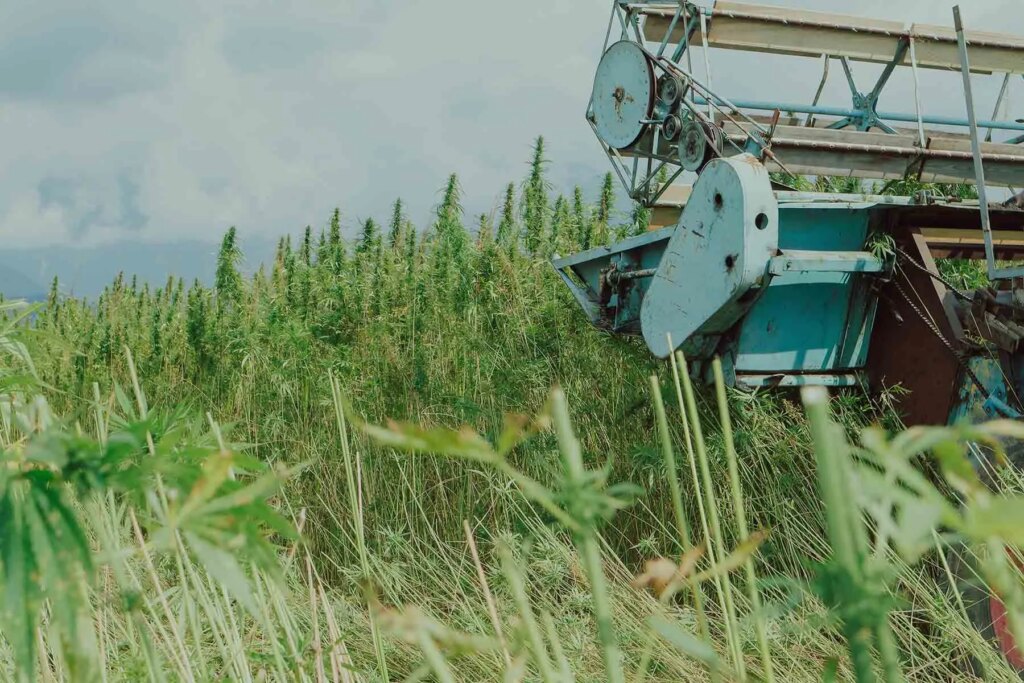
Hemp grows rapidly, with little need for intensive watering and no need for pesticides. It sequesters carbon from the atmosphere as it grows and can even clean and improve the soils it roots in. It’s an excellent cover crop for farmers, perfect for rotating with other food-based plants, and once the CBD-rich flowers have been harvested, the rest of the plant can be used for fibre, paper, and building materials, amongst other things.
Industrial hemp can be grown legally across most of the world, including here in the UK, where recent regulatory changes have made it easier for farmers to plant. However, the study highlights that there isn’t currently enough CBD being produced globally to replace PET yet. The current market produces CBD for wellness products like oils, creams, and supplements. If pCBDC is going to disrupt the world’s reliance on petroplastics, a global effort to scale hemp cultivation will be needed.
This could be pCBDC’s biggest block – a classic chicken and egg scenario where farmers are reluctant to switch to a crop without the guaranteed demand and manufacturers can’t commit without reliable supply.
Green steps forward
While pCBDC has only just emerged from the labs at the University of Connecticut and Purdue, the research team is pushing forward with pilot programs and lifecycle studies. This next level of analysis will confirm if pCBDC can genuinely become a sustainable alternative to petrol-based plastics.
Regulatory challenges line the path ahead. Food-touching packaging has to go through rigorous testing, but the team say they’re actively looking for partnerships to test the new hemp-based material in the real world.


pCBDC solves a problem that stumps policymakers and the public alike. As countries around the world desperately try to reduce our reliance on single-use plastics and carbon-intensive processes, replacing petrol-based packaging with one that fits nicely into supply chains and sequesters carbon rather than producing it could be a genuine win for multinational brand houses like Unilever or Coca-Cola. The timeline still stretches out to the years ahead, but unlike previous hemp and plant plastics, pCBDC appears to overcome the technical and performance barriers that have halted the switchover before. The question now is whether the political and commercial will can catch up.
Once again, we see an irony in the role cannabis can play in saving the world, despite decades of vilification. “We came together on this project to try to replace conventional petroleum-based plastics with something found in nature. We are finding new ways to use the entire plant,” said Sotzing. “That’s what was done with oil, in that they found a way to use every little drop, even down to the sludge that becomes asphalt… now we do that with hemp, too. There are plenty of things inside that plant that are useful.”
While the hype around hemp has played out before, pCBDC represents something different – a material that doesn’t ask us to choose between performance and sustainability, that works with existing infrastructure rather than demanding we rebuild it, that turns a crop we’re already growing into something genuinely useful.
Whether it moves from petri dish to production line depends on politicians, investors, and brands who need to be willing to take a punt on this plucky plastic. The chemistry is there. The rest is up to us.