


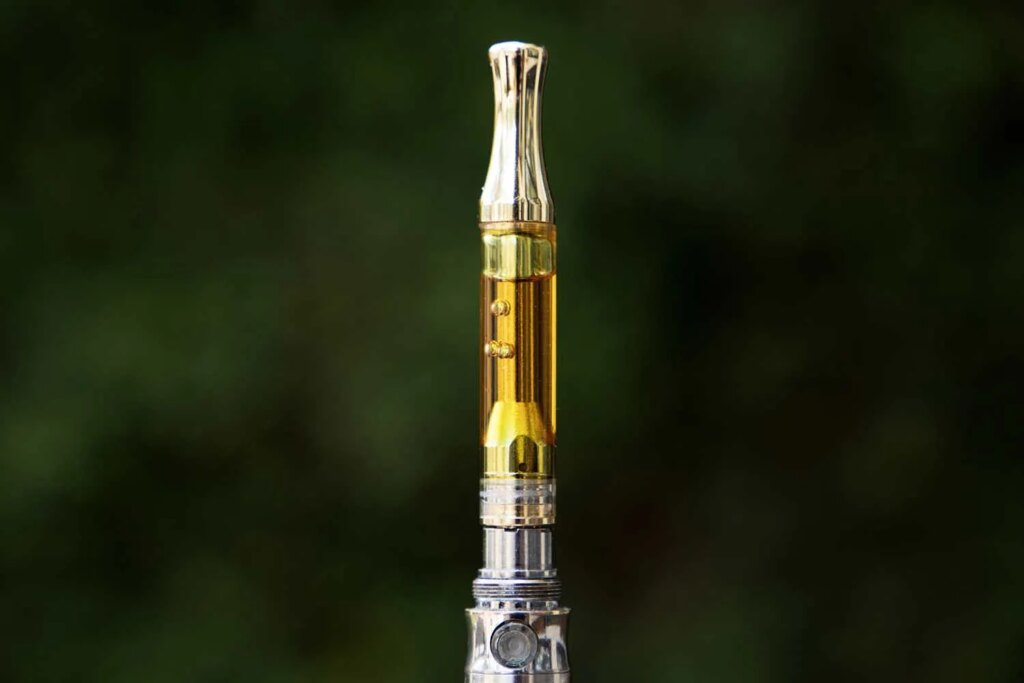
The use of vape cartridges containing THC is linked to the earlier development of Cannabinoid Hyperemesis Syndrome (CHS), according to a newly published study from the University of California.
Researchers surveyed 1,134 people with CHS and found that whilst different methods of consuming cannabis made no difference to the severity of symptoms, vape cartridges were associated with a shorter time to symptom development compared to other products.
Published in the journal Cannabis & Cannabinoid Research, the study used an anonymous survey of users of online CHS communities, asking about frequency of cannabis use, product sourcing, and CHS-related symptoms.
The findings come as cases of CHS presenting to emergency departments in the US have risen sharply in the past decade. Numbers increased from 4.4 cases per 100,000 visits in 2016 to 22.3 cases per 100,000 visits currently, having peaked at 33.1 cases per 100,000 visits in the early 2020s.
CHS is a condition that results in patients experiencing repeated and severe bouts of nausea, abdominal pain, and vomiting. It has been linked in previous research to the heavy and daily use of cannabis products.
CHS symptoms present in three stages: the prodromal phase, the hyperemetic phase, and the recovery phase.
In the prodromal phase, patients generally experience morning sickness, anxiety and mild abdominal discomfort. This phase can persist for several years and is often aggravated by continued cannabis use.
Patients in the hyperemetic stage report episodes of intense vomiting and abdominal pain, have a reduced level of food intake, which often results in weight loss, and are prone to taking very hot showers or baths to ease symptoms. This stage usually comes to an end when cannabis use is stopped.


The recovery stage signals a return to normality for the patient and can last for weeks or months. However, symptoms of CHS are seen to return with the resumption of cannabis use.
The survey revealed that at least 96% of patients with CHS used cannabis at least once every day, and around 45% said that before their symptoms started, they used cannabis six or more times per day.
Patients reported using around 10.3 grams of cannabis per week, with most products coming in the form of flower or vape cartridges. Researchers found no link between where products were obtained from and symptoms of CHS. Patients sourced their products from licensed and unlicensed dispensaries, as well as from home-grows, with 61.9% purchasing from licensed dispensaries.
Nearly two-thirds (65.4%) of respondents had used cannabis for more than three years before developing symptoms.
The researchers concluded that CHS is strongly associated with persistent and heavy use of inhaled cannabis products, especially flower and THC-containing vape cartridges. They noted that vape cartridges had a stronger association with the earlier onset of CHS symptoms than other products, and advised that these results be used to help improve the early detection of CHS in patients.
“Our findings suggest that CHS is most associated with long-term, frequent use of inhaled delta-9-tetrahydrocannabinol (Δ9-THC) dominant cannabis. The acquisition source of cannabis products did not affect the syndrome presentation. Although many different cannabis consumption methods were represented, smoking and vape cartridges were the most commonly reported. The use of vape cartridges was associated with a shorter time to the development of CHS symptoms. Increased awareness of these patterns could improve the early recognition and management of CHS,” the author wrote.
Whilst the study shows an association between vaping and earlier CHS onset, the researchers noted it does not prove that vaping directly causes the condition to develop more quickly. They suggested several possible factors, including higher THC concentrations in vape products, faster absorption into the bloodstream, and the finding that people who exclusively used vape cartridges tended to consume cannabis more frequently.