


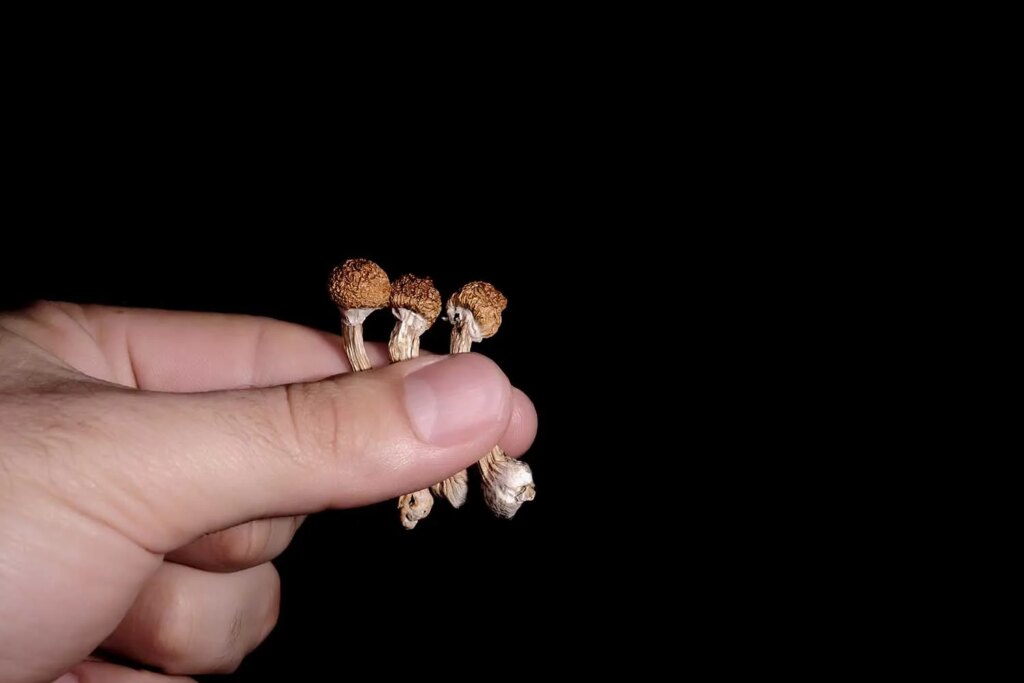
Psilocybin, the psychoactive compound found in magic mushrooms, could offer a breakthrough treatment for cocaine addiction, according to a clinical trial published in JAMA Network Open.
The study, conducted by researchers from various US and Swedish institutions, including Johns Hopkins University, found that those given a single dose of psilocybin combined with psychotherapy had more cocaine-free days over six months compared to those receiving a placebo. 30% of participants in the psilocybin group achieved complete abstinence throughout the study period, whilst none in the placebo group did so.
“In this randomized clinical trial of 40 adults with cocaine use disorder, a single (25 mg per 70 kg of body weight) dose of psilocybin with manualized psychotherapy resulted in a higher percentage of cocaine abstinent days, a greater likelihood of complete cocaine abstinence, and a reduced risk of cocaine lapse through 180 days after end of treatment as compared with placebo with the same manualized psychotherapy,” the study said.
Cocaine was used by an estimated 25 million people worldwide in 2023, and annual production rose by nearly a third to 3,708 tons, according to the U.N. Office on Drugs and Crime’s (UNODC) World Drug Report.
At the same time, overdose deaths and admissions to emergency departments in hospitals and addiction services have increased to record highs. In the UK, the number of overdose deaths caused by cocaine rose 12.5% from 1,118 in 2023 to 1,279 in 2024, and the number of deaths has risen for 14 consecutive years.
Unlike alcohol, opioids such as heroin and prescription painkillers, and nicotine, there are currently no medications that can be prescribed for addiction to stimulant substances like cocaine and amphetamines.


Psilocybin has previously been studied for its potential to treat other addictions. Earlier this year, a study found that psilocybin could be six times more effective at treating nicotine addiction than patches, whilst other research has investigated its use in treating alcohol and opioid addiction. Due to this, the researchers hypothesised that psilocybin would perform better than a placebo in the treatment of cocaine addiction.
To test this, they recruited individuals who lived with cocaine addiction but were compelled to stop taking it and who had no significant comorbidities. They were recruited through a media advertising campaign which targeted people who “use cocaine and want to quit.”
Participants were split into either the psilocybin group or the placebo group before they attended 4 to 5 initial sessions of psychotherapy lasting for 2 hours each. After these sessions, the participants were administered a single dose of psilocybin, or a dose of a drug called diphenhydramine, an antihistamine often used in psychedelic clinical research as a placebo.
During the following seven days, the participants had to give urine samples to prove their abstinence from cocaine, followed by five weekly, 1-hour post-randomisation integration psychotherapy sessions. Researchers followed up with participants at 90 days post their final session, and again at 180 days.
The results of their study showed that those who were given psilocybin had 29% more cocaine-free days, were more likely to be abstinent for the duration of the 180-day study, and had a 72% lower risk of relapsing during the study than those given the placebo.
“This randomized clinical trial is the first, to our knowledge, to demonstrate that psilocybin coupled with psychotherapy may be safe and efficacious in the treatment of CUD [cocaine use disorder],” the study said. “Psilocybin-treated participants showed significantly greater percentages of cocaine abstinent days, higher rates of complete abstinence from cocaine, and a decreased risk of cocaine lapse over time. These findings are a potentially important advancement in the treatment of CUD, a condition for which there are no approved pharmacotherapies and limited psychosocial interventions.”