


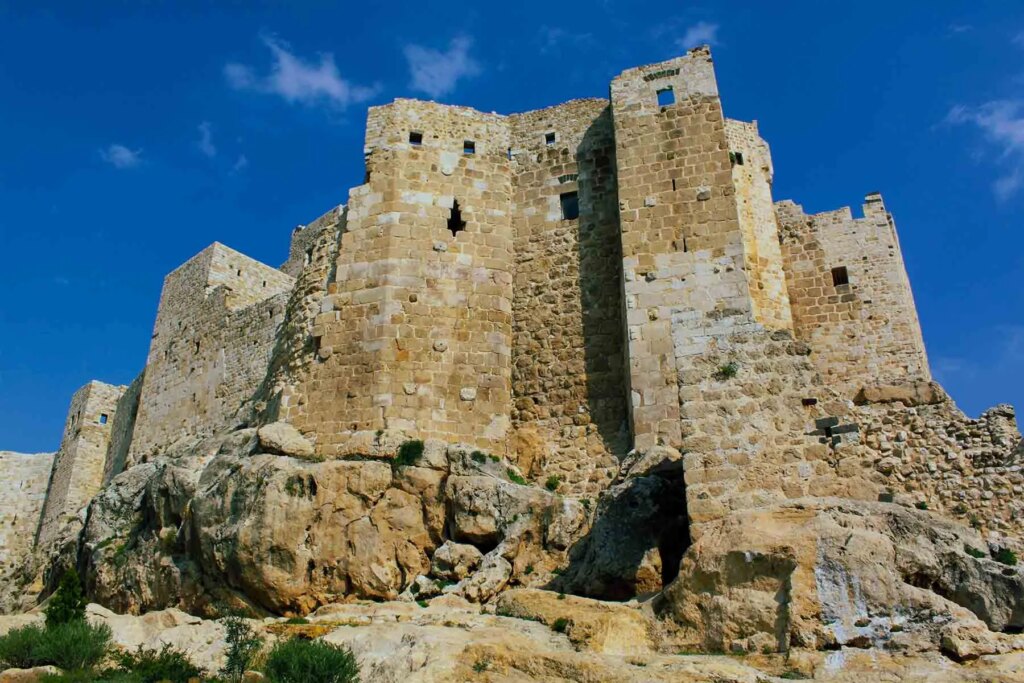
From a base in the mountains of Persia, Hasan-i Sabbah led the Nizari Ismailis, a group of devoted Muslims with a fierce reputation for discipline and violence. Their fidāʾīs (fedayeen), selected devotees willing to risk death for the cause, became well known for dispatching their political and religious rivals with brutal efficiency. Legend has it that they would do so under the influence of hashish, earning them the name Hashashins.
Alamut, the Hashashins’ mountain fortress in the Alborz range of northern Persia, fell to Hasan in 1090 and remained under Hashashin control until the Mongols crushed it in 1256. According to legend, the fortress had in its vicinity an enclosed garden nestled in a valley containing extravagant palaces, trees with exotic fruits, beautiful maidens playing musical instruments and singing sweet songs and streams flowing with wine, milk and honey.


The Nizari followed the teachings of the Isma’ili Shia branch of Islam, which put them at odds with many other religious and ruling powers. They became infamous for politically and religiously motivated assassinations, often carried out theatrically, in public and at close quarters with daggers. Although the Hashashins were centred at Alamut, they controlled other fortresses elsewhere in Persia. Some Nizari missionaries also established communities in Syria.
The Hashashins fought the Seljuks, powerful Sunni Muslim rulers who controlled much of Persia and the surrounding region, while wrestling with a bitter succession dispute within Ismaili Islam itself. They murdered high-profile individuals – local rulers, rival religious figures, even Crusaders who flip-flopped between friend and foe. The Hashashins earned themselves a fearsome reputation.
Extraordinary accusations of hash taking, witchcraft, mind-control and blind, fanatical devotion to the Old Man of the Mountain were piled on the Hashashins, accumulating over time. The claims came from many different sources, including contemporary foes, Marco Polo and even some modern-day writers. These tales have been told, retold and developed over nearly a thousand years. Were the stories of hashish smoking, virgin-filled exotic gardens and fanatical devotion propaganda, built on myth and legend, or are they steeped in reality?
Origins and beliefs
When Hasan seized Alamut, two rival Muslim powers dominated much of the Middle East: the Sunni Seljuk ruling dynasty whose influence spread throughout Mesopotamia and Persia, and the Ismaili Shia Fatimid Caliphate whose political and religious leader ruled from Cairo. Hasan was Ismaili and worked as an Ismaili dāʿī in Persia, essentially a missionary. The Fatimid Imam-caliph al-Mustansir died in 1094, causing a succession dispute between his sons. Hasan and the Persian Ismailis recognised Nizar as the rightful Imam, resulting in them becoming the Nizari branch of Ismailism.
Islam has a principle known as taqiyya. It allows a follower of Islam to conceal or deny their faith if they feel under threat, persecuted or coerced. The Nizari, living in turbulent religious times in a land dominated by a rival Islamic power, often faced persecution for their beliefs. They practised taqiyya as a way of survival, which added to their mysterious reputation among outsiders.
The Hashashins adhered to a hierarchical system with Hasan as a representative of the Imam at the top of the Nizari organisation. The fedayeen undertook assassination missions; legend says that they stood ready at any moment to become martyrs for Hasan and for their faith.
Tactics
The Nizari faced foes much larger and more powerful than themselves, particularly the Seljuks. Unable to overcome enemies through sheer strength and numbers, they chose tactics that relied on stealth and efficiency. They sent individual fedayeen or small teams on dangerous missions targeting prominent political and religious rivals.
According to Iranian-British scholar Dr Farhad Daftary, the fedayeen became renowned for using daggers at close quarters, often in full, graphic detail. These tactics instilled fear among the Hashashins’ enemies.
One account drawn from medieval sources tells of two fedayeen gaining the confidence of Mu’in al-Din Kashi, a high-ranking Seljuk and vizier to the sultan, before stabbing him to death en route to the mosque.
Historian Steve Tibble recounts an attempt to assassinate Saladin in 1175, a powerful Sunni ruler who posed a grave threat to the Nizari. According to the account, thirteen attackers armed with daggers were sent into Saladin’s camp to kill him. They blended in with the crowd as they approached his tent, but lost their cover at the last moment when one of them was recognised by an old acquaintance.
With the element of surprise gone, they stormed the tent. The attacker who came closest to Saladin was ferociously cut down and had his head chopped off by an emir, and eventually all thirteen were killed.


The assassination attempt failed, but not before the attackers killed several members of Saladin’s entourage. Imad al-Din, Saladin’s chancellor who recorded the attack, wrote that “the others were not killed until they killed a number of people”.


Other sources recount multiple occasions of fedayeen penetrating the households of their enemies in disguise, so they were positioned well to assassinate the target if needed. Surviving Nizari records do not describe how the fedayeen trained, or whether they attended a sort of medieval spy school, which some more elaborate stories include.
Daftary argues that the Nizari used assassination because they were a much smaller force facing a Seljuk enemy who possessed superior military power. By carefully selecting their targets, the Hashashins were able to counter the imbalance without always relying on traditional warfare. They became so well known for these tactics that enemies began attributing all assassinations to them.
The making of a legend
Marco Polo’s version of the Hashashin legend has evolved to become the best known of all, and includes a vibrant description of the Paradise Garden. The story goes that aspiring fedayeen would drink an intoxicating potion and fall into a deep sleep; guards then carried them to the garden, where they woke to beautiful maidens playing instruments, rivers flowing with milk and honey, irresistible food and the finest wines. After days of this, another dose of the potion knocked them out, and they woke back at the Old Man’s court. He told them they would return to paradise when they died – but only if they obeyed his commands. This promise of a return to the Heaven they tasted briefly ensured the fedayeen’ blind loyalty.
Polo’s account doesn’t hold much water, compelling as it sounds. Contemporary Muslim commentaries, often hostile towards the Hashashins, do not mention hashish, or any other drug use. A first-hand account of Alamut, given by Juwayni, who accompanied the Mongols when they sacked it in 1256, describes a library, large water cisterns and storage facilities, but does not mention the Paradise garden. But it was these stories, embellished by travellers like Marco Polo, Crusaders, chroniclers and other Western observers, that built the legend of the Nizari piece by piece.


So why were they called Hashashins?
It is not a myth that the English word assassin derives from hashish. The two words share a strong etymological connection – but that doesn’t mean the fedayeen were hot-knifing lumps of Lebanese Red before setting off on a mission.
The Arabic word hashīsh (حشيش), originally used to describe dry herbs or grass, later became associated specifically with intoxicating preparations of the cannabis plant.
Crusaders arriving in the area would have encountered the names ḥashīshiyya, or ḥashīshīn, derogatory names probably given to the Nizari by rivals. Among Europeans, these names developed into forms such as assissini and assassini. The Nizari’s assassination tactics made assissini and assassini synonymous with treacherous murder itself, not just killings carried out by the Old Man’s fedayeen.
The etymology suggests that rather than the Nizari being called Hashashins because they used hashish, or were accused of using hash by contemporaries, the legend that they used hashish may have developed because they were already being called Hashashins.
The reports of stoned assassins, sorcery, a Paradise garden and soldiers blindly throwing themselves off high walls to die on the rocks below are almost certainly part of the legend that has developed over time.
The legend of the Nizari sits somewhere between truth and myth. The Nizari fedayeen were loyal to the Ismaili cause; they carried out targeted assassinations at close quarters with daggers, and the Nizari state was centred in the mountain fortress of Alamut. Even without the drugs and witchcraft, the reality needs no embellishment.
The legend survives due to the works of people like Marco Polo and continues to be told today. Assassin’s Creed, the popular gaming series, took direct inspiration for many of its storylines and features from the Hashashin legend. The game’s famous Leap of Faith echoes fabled accounts of fedayeen throwing themselves to their deaths – a story that itself requires a leap to believe.