


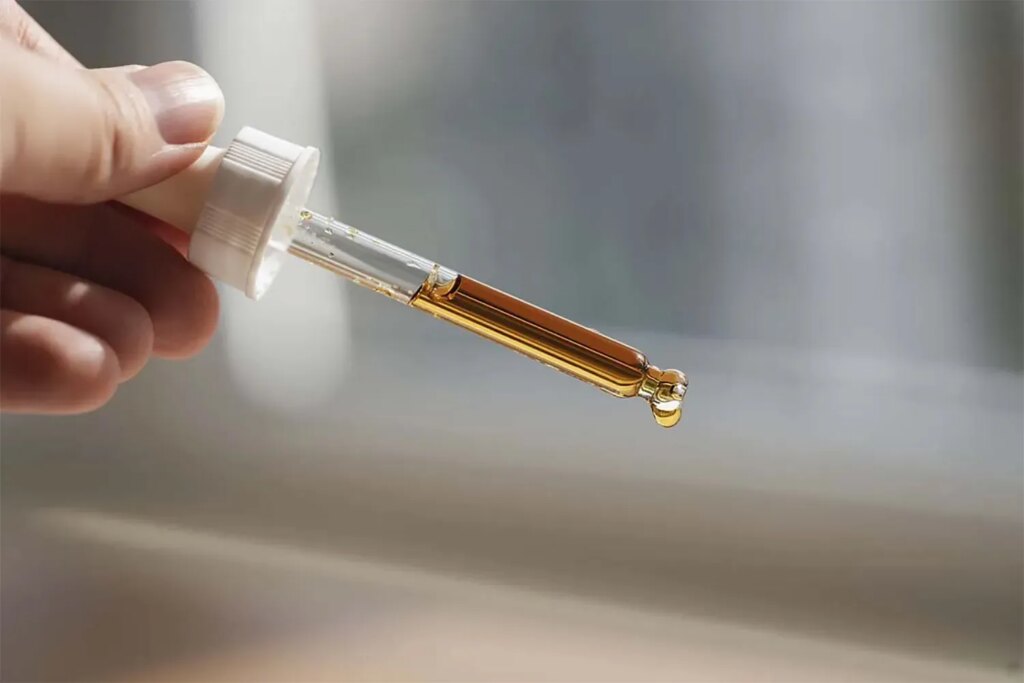
Approximately half of cancer patients experienced meaningful improvements in symptoms after using cannabis oil extracts placed under the tongue, according to results from a new Canadian study.
The study, which has not yet been peer-reviewed, was published on the preprint server medRXiv and conducted by cancer specialists from various Canadian universities and hospitals.
Ninety-one participants took part in the trial across eight cancer centres in Canada. Each person tested four different treatments – three types of cannabis oil (THC-dominant, CBD-dominant, and 1:1 balanced mixture) plus a placebo – for four days each in a randomised order.
56% of the participants recorded meaningful symptom improvements after treatment with at least one extract. Crucially, no single type of extract proved better than the others on average, though most individuals found one worked better for them personally.
Medical cannabis is becoming an increasingly popular treatment for many conditions, and many patients use it to help deal with the symptoms of cancer and treatment, such as pain, nausea, appetite loss, sleep disturbances, and more.
The study’s unusual design – where each participant tried all treatments – was chosen specifically because cannabinoids affect people differently. Standard trials comparing single treatments between groups may underestimate benefits experienced by some individuals.
“There is substantial diversity between individuals in endocannabinoid physiology. Widespread anecdotal evidence suggests that some patients find cannabinoids very helpful, and others do not. Trial designs that don’t accommodate patient heterogeneity may underestimate the benefits experienced by some participants. Parallel group studies have difficulty recruiting with a placebo-only arm, and advanced cancer patients have a high dropout rate due to clinical instability. Symptom severity scores alone are limited in detecting clinically meaningful changes,” the study said.
Amongst patient communities, there is a host of knowledge and discussion regarding the use of cannabis as a treatment for cancer and symptoms associated with the disease. Despite this widespread anecdotal evidence, researchers noted a lack of robust clinical trials examining cannabis’s potential to help people living with cancer.


“Our finding that no preparation was better than the others on average, but most participants found one to provide greater benefit individually may further explain why trials that focus on a single preparation may have underestimated the potential benefit of cannabinoids,” the authors added, while noting that restricting patients to one type of extract in trials ignores the fact that people respond to certain cannabis extracts depending on their unique physiology.
At the beginning of the study, patients were issued four bottles corresponding to each of the four-day cycles. After each treatment and a two-day ‘wash-out’ period, patients answered questions from the Patient Global Impression of Change (PGIC). Patients had their sleep and night-sweat symptoms graded on the Edmonton Symptom Assessment System (ESAS-r).
After analysis, researchers found that over half reported ‘meaningful reductions in their symptoms, with an average reduction of 1.4 points on the PGIC scale, which equated to roughly a 20% improvement.
“Fifty-six percent of the 89 participants with complete Patient Global Impression of Change (PGIC) data reported at least a 1.4-point improvement compared to placebo with at least one extract,” the study authors said. “Subgroup analysis showed response rates of 50 percent for the pain, 47 percent for sleep, and 60 percent for anxiety subgroup,” wrote the authors.
There were a small number of mild to moderate adverse events (AE) reported, with THC being 189% more likely to be associated with an AE than the placebo. All side effects resolved quickly when doses were reduced or stopped.
The researchers said that cannabis can be a safe and effective treatment for symptoms associated with cancer, particularly sleep disturbances.
“Medical cannabis extracts can be meaningfully beneficial for cancer-related symptoms in approximately 50% of patients, particularly for sleep and related symptoms,” they concluded. “A starting dose of 2.5mg of THC/CBD three times a day was well-tolerated. Personalization of treatment is required to optimize response.”