


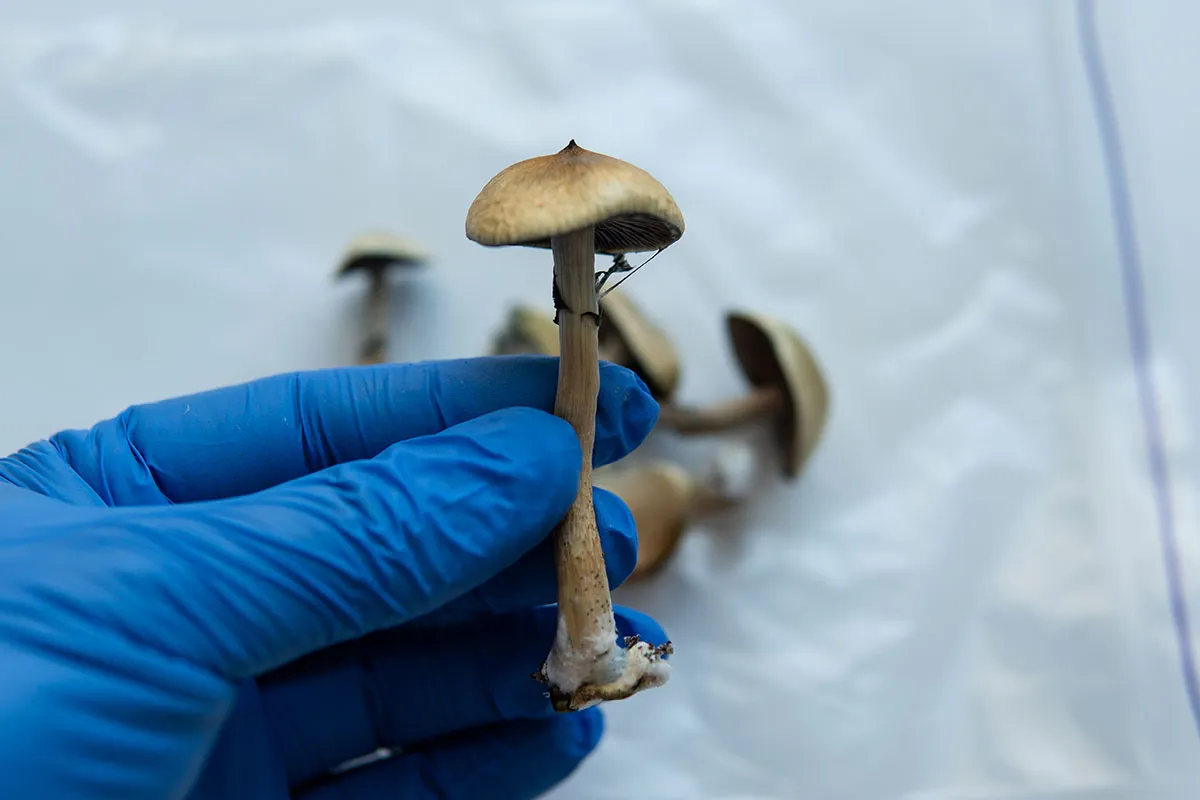
Researchers at Imperial College London have demonstrated that a 25mg dose of psilocybin – the primary active compound in magic mushrooms – produces significant changes in brain activity within just one hour of administration, with structural alterations still detectable one month later.
The study, published in the journal Nature Communications, examined 28 healthy volunteers who had never previously used psychedelic substances. Using electroencephalography (EEG) and magnetic resonance imaging (MRI) scans, scientists tracked both immediate and long-term effects on brain structure and function.
Within hours of taking psilocybin, participants showed a marked increase in brain entropy – a measure of signal complexity that indicates the brain is processing more information.
Researchers also noted changes in the brain’s physical structure. Specialised scans that measured the diffusion of water along nerve bundles in the brain showed some nerve tracts had become denser and more robust after participants had taken psilocybin.
“It’s remarkable to see potential anatomical brain changes one month after a single dose of any drug,” Prof Robin Carhart-Harris, a neurologist at the University of California, San Francisco, and senior author on the study, told The Guardian. “We don’t yet know what these changes mean, but we do note that overall, people showed positive psychological changes in this study, including improved well-being and mental flexibility.”
The results support previous animal studies, in 2021 researchers at Yale University found that psilocybin given to mice increased the density and size of dendritic spines, nerve cells that aid in the transmission of information between neurons in the brain.

“If verified in subsequent work, this finding may be viewed as evidence of anatomical ‘neuroplasticity’ after first-ever psychedelic use in humans,” the study said.
The researchers used a fixed-order, placebo-controlled study where participants were given a ‘functionally inactive’ dose of 1mg psilocybin one month before a full 25mg dose.
Participants underwent EEG monitoring during the psychedelic experience as well as several brain scans in the following weeks. They also completed a series of follow-up tests to measure well-being, psychological insight and flexibility in thinking.
The results showed that an increase in brain entropy predicted an uptick in next-day psychological insight, which then resulted in longer-term improvements in well-being.
All but one participant rated their 25 mg psilocybin experience as the “single most unusual conscious state of their entire lives”.
The researchers also noted that people who had the largest spike in brain entropy after taking psilocybin were most likely to report deeper psychological insight and better wellbeing a month later, highlighting the link between flexible thinking and improved mental health. “It suggests a psychobiological therapeutic action for psilocybin,” Carhart-Harris said.The study showed that a single dose of psilocybin, the main active ingredient in magic mushrooms, can cause measurable changes in brain anatomy and function that last for up to one month.
